

Hiking is one of the best ways to experience Maui’s stunning nature and scenery.
The best part about hiking on Maui is that anyone can do it! From easy, paved walking trails to backcountry treks, there is a hiking trail on Maui for everyone.
Below we’ll share some of the best Maui hikes by difficulty, from easy walks to challenging trails. Don’t forget to save this link for your next visit to the Valley Isle.

Best Maui Hikes by Difficulty: From Easy Walks to Challenging Trails
Maui Hiking Tips
- Stay on marked trails. This isn’t just important for your safety. Maui is home to many endangered plants, insects, and animals. Staying on marked trails ensures you don’t accidentally trample critical habitat or burrows.
- Wear closed-toed shoes (with one exception). In general, it’s a good idea to wear closed-toed shoes while hiking on Maui. The Twin Falls upper trail requires a short water crossing, so keep that in mind when selecting footwear.
- Sun protection is vital. Even on a cloudy day, Maui’s sun sneaks up on you. Don’t forget to pack sunscreen and a hat.
- Bring lots of water. Bring more than you think you need, especially if you’re hiking in the sun (see above) or at a high elevation.
- Park in designated parking stalls. Some of Maui’s hiking trails are very popular. If the parking lot is full, you may be tempted to park on the road shoulder or outside of a marked stall. Doing so can block driveways or cause traffic jams, so please stick to marked stalls.
Okay, now for the fun stuff!

• Hiking Level: Easy •
Oheo Gulch – Kuloa Point Trail
Located in the Haleakala National Park’s Kipahulu District, the Kuloa Point trail is a short descent from the visitor center to the stream mouth of Oheo Gulch. Totaling 0.6 miles, this loop trail takes you past Oheo Gulch’s cascading waterfalls and along Kipahulu’s verdant coastline. Don’t confuse this trail with the famous Pipiwai Trail, which heads uphill from the visitor center. (See more on the Pipiwai Trail below.)

Iao Valley State Monument
Iao Valley’s gentle paved loops are more walking trail than hiking trail—that is, until you reach the stairs leading to the Iao Needle viewpoint. Spoiler: the stairs are worth it! Before reaching the viewpoint, Iao’s mellow walking paths take you along the perennial Iao Stream and offer incredible views of vertical valley walls and lush vegetation. Out-of-state residents must make Iao Valley reservations in advance.

Ohai Loop Trail
The Ohai Loop Trail is an easy, 1.3-mile trail that loops along Maui’s stunning northernmost coast. You’ll stroll through native coastal vegetation and soak in views of Haleakala, Molokai, and the dramatic Kahakuloa Headland. With only 183 feet of elevation gain and a compact dirt path, this is a doable trail for almost all abilities. Note: car break-ins occur in this rural area. Don’t leave valuables in your vehicle when visiting this trail.

Waianapanapa Piilani Trail
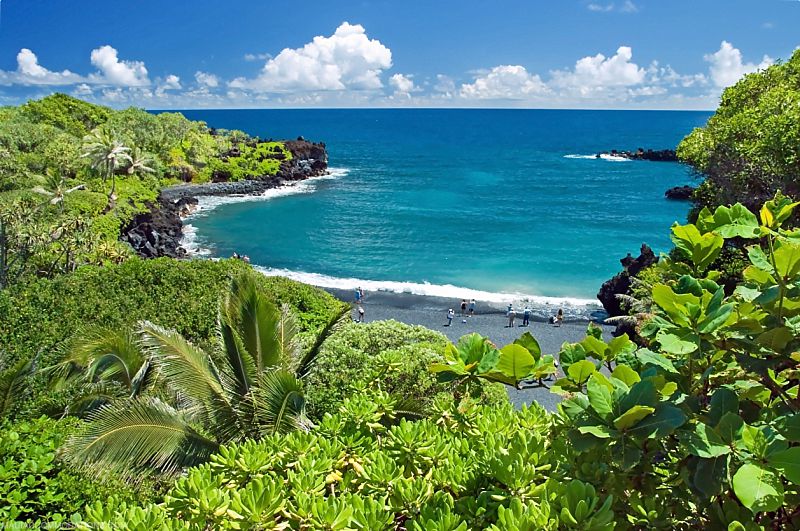
This trail hugs the rocky coastline along Waianapanapa State Park. You can head north or south, though the south trail tends to be more popular for its blowholes and lava rock formations. You’ll also pass through native coastal hala (Pandanus) forest with views of the ocean and the potential for seabird sightings. Sure footing is required here, as you’ll be walking over lava rocks. Out-of-state visitors need a Waianapanapa reservation to enter the state park.
• Hiking Level: Moderate •
Pipiwai Trail
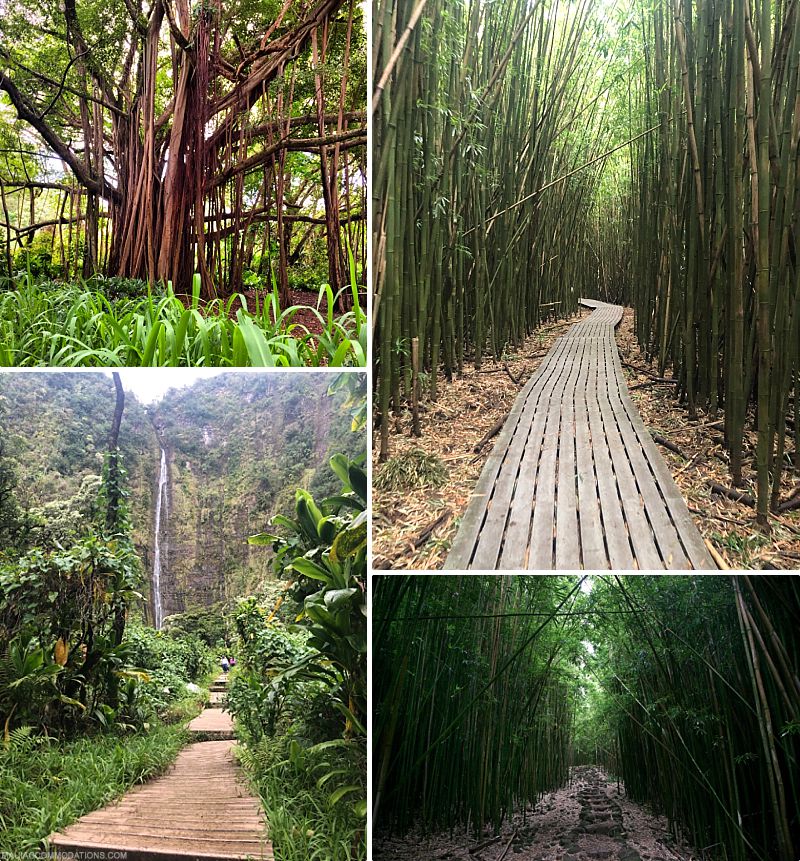
Arguably the most famous trail on this list, the Pipiwai Trail makes a four-mile round-trip journey to the 400-foot Waimoku Falls. This trail takes you through a lush bamboo forest, beneath a sprawling banyan tree, and offers views of Makahiku Falls along the way. Expect muddy and occasionally slippery sections, as well as frequent mosquitoes. Waimoku Falls has frequent rock falls, so please adhere to all signage once you reach the top.
Hoapili Trail
The Hoapili Trail – also known as the King’s Highway – follows a 1.6-mile stretch of Maui’s most recent lava flow along the island’s remote south shore. You’ll cross a rugged expanse of lava with little shade or vegetation, so sturdy footwear and plenty of water are a must. Sweeping coastal and mountain views are the highlight here – as well as sightings of feral goats. This trail is best tackled in the cooler morning hours.

Makawao Forest
Makawao Forest Reserve offers a shaded escape from the coastal heat, with the Kahakapao Loop Trail winding roughly six miles through groves of eucalyptus, tropical ash, and ferns. This well-maintained dirt path is family-friendly and doubles as a mountain biking trail, so watch for two-wheeled traffic. Note: There are no restroom facilities at the trailhead.

Twin Falls – Upper Falls
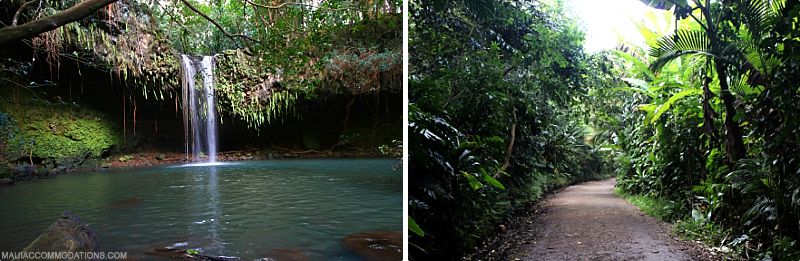
Reaching the Upper Falls at Twin Falls takes anywhere from 30 minutes to an hour each way, following a gravel path through lush tropical plants. This trail also features a stream crossing which requires careful footwork, and a walk over an old rock wall with no railings. The reward is a picturesque waterfall spilling into a swimming hole tucked into the rainforest. Remember, Twin Falls is private property that allows public entry. Parking is limited and costs $10 per vehicle. On the first Saturday of every month, entry is limited to Hawaii residents only.
Nakalele Blowhole
The trail to Nakalele Blowhole is short – only about 0.4 miles each way with about 215 feet of elevation change – but the descent over rough, rocky terrain demands careful footing. You’ll pass an otherworldly landscape of eroded rock formations before reaching the blowhole itself, which shoots seawater up to 50 feet in the air under the right conditions. Stay far back from the blowhole opening, as rogue waves have swept visitors into the ocean here. Vehicle break-ins do occur here, so leave nothing in your car.

• Hiking Level: Difficult •
Waihee Ridge
Totaling 4.4 miles out-and-back, the Waihee Ridge Trail winds up the spine of a lush West Maui Mountain ridge. Near-constant uphill hiking rewards you with sweeping views of Waihee Valley, Makamakole Falls, and, on clear days, the mountain’s lush peaks. This trail can get extremely slick and muddy after rain, so only attempt it during strings of good weather. Mornings are the best time to hike here, as afternoon clouds often roll in and obscure the views.

Lahaina Pali Trail
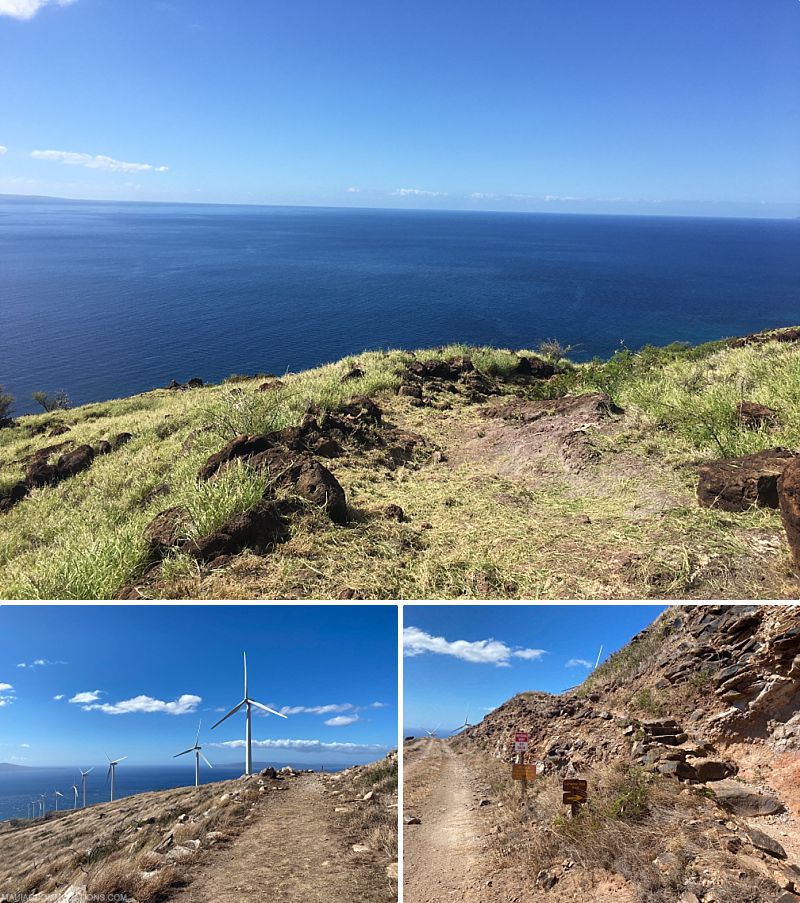
The Lahaina Pali Trail follows a strenuous, ancient track that was once used to travel from Lahaina to Wailuku on foot or horseback. This five-mile stretch is only a portion of the historic 25-mile route, but it still offers the same stunning ocean views and sense of adventure. From the Maalaea trailhead, the path climbs over 1,600 feet up into the West Maui Mountains, traveling beneath windmills and through sheer valleys before ending at Ukumehame. The coastal views here are second to none, and it’s a great place to whale watch in winter.
*Some notes about the Lahaina Pali Trail:
- Logistics: This is not an out-and-back route. The trail starts at one trailhead and finishes at another. Round trip is ten miles. We recommend either turning around halfway or having a plan to get a ride back to your car at the trailhead where you started.
- Conditions: The heat here is brutal, and there is no shade. Many rescues have involved hikers who didn’t bring enough water. Many hikers start this trail at or before sunrise to avoid the heat of the day.
Keoneheehee – Sliding Sands
One of Maui’s most spectacular hikes, the Keoneheehee (Sliding Sands) Trail at Haleakala National Park travels through the heart of Haleakala Crater. Starting near the 10,000-foot summit, this otherworldly trail descends roughly 2,000 feet to the crater floor, passing cinder cones and endemic silverswords.
Though the Keoneheehee Trail itself extends 9.1 miles one way to the crater’s eastern wall, most hikers do not take this route. Some hikers descend only the first mile and turn around, as the elevation makes hiking back uphill to the summit extremely difficult.
Others prefer to descend to the crater floor and join the Halemauu Trail, which takes you through the crater’s greener northern section and deposits you at the Halemauu Trailhead. This is a popular through-hike option – though it is equally challenging. The hike culminates with a 2,000-foot ascent up a series of steep switchbacks.

Whatever your ability level, hitting one of Maui’s trails will introduce you to a side of the island that many visitors miss. So strap on your hiking boots, and happy trails!

- Looking for great places to stay on Maui? You’ll save by BOOKING DIRECTLY with the owners/managers of these accommodations.
- Looking for Maui deals? Sign up here for our free monthly Maui Deals & Steals e-newsletter with the latest book-direct deals from our advertisers.

 Aloha! Tiffany here. I've been blessed to call Maui home since 2011. With a background in the island's finest restaurants and hotels, guiding visitors to create unforgettable Maui memories is more than a skill I've mastered—it's a profound source of joy for me.