
Some common questions we’re asked by visitors are: “What words do I need to know in Hawaii?” “How do I say thank you in Hawaiian?” or “What languages are spoken in Hawaii?”
Technically, three languages are spoken in Hawaii? English, ‘Olelo Hawaii (Hawaiian language), and Pidgin.
We’ll get into common Hawaiian words and phrases below—but fortunately for most American visitors, English is the everyday language spoken in Hawaii. But you will certainly hear Hawaiian words, phrases, and songs while visiting the island. You’ll also see various signs, menus, or brochures that incorporate Hawaiian terminology.
Hawaii’s third, unofficial language is Hawaiian Pidgin, which most born-and-raised locals know fluently. Pidgin is a multi-cultural slang that developed during Hawaii’s plantation era. Pidgin is an interesting part of Maui’s culture.
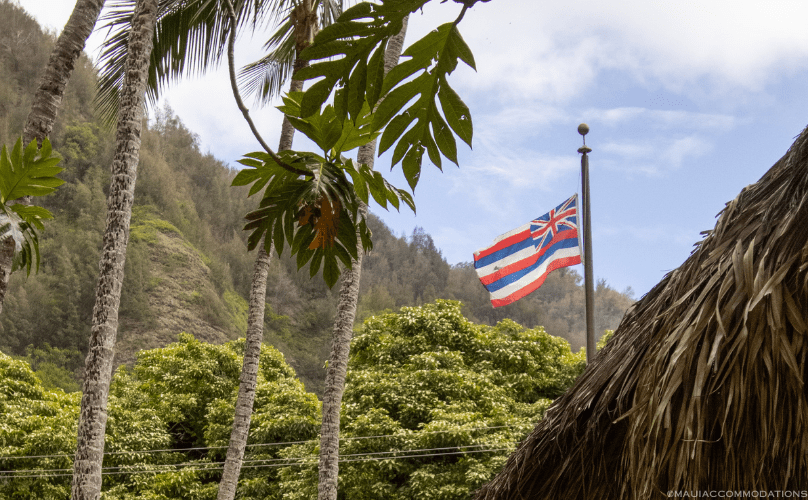
History Lesson: You may be wondering why Hawaiian language isn’t more prominent in the islands. Hawaiian language—along with many Hawaiian customs, like hula—was banned from school instruction in 1896, shortly after the overthrow of the Hawaiian Kingdom. Children faced strict punishment if they were caught speaking Hawaiian in school. The number of native speakers declined dramatically. By 2001, only 0.1% of Hawaii’s population could speak Hawaiian. The federal government didn’t lift the ban on Hawaiian language instruction until 1987.
Fortunately, Hawaiian language and culture experienced a revival beginning in the 1970s. Today, the native speaking population has jumped a bit—not dramatically—but Hawaiian language is certainly more prevalent than it’s been in the last 100 years, thanks to Hawaiian language immersion schools and other cultural programs.
As a visitor, no one expects you to be fluent in Hawaiian or nail every pronunciation. But you can show your appreciation for ‘Olelo Hawaii by learning a few words and short phrases. One easy thing to do before you come to Hawaii: learn how to say thank you in Hawaiian.
Here are just a few common Hawaiian and Pidgin words and phrases you might hear (or see in written form) while visiting Maui:
HAWAIIAN WORDS AND PHRASES
aloha (uh-LOW-hah): aloha is by far the most popular and commercialized Hawaiian word, but we’ll explain it here just in case you aren’t familiar.
Aloha is most commonly used for for “hello” and “goodbye,” but it can also be used as a term for love, affection, sympathy, and compassion.
Additionally, “aloha” is a reference to a spirit of kindness, hospitality, generosity, and acceptance.
a hui hou (ah hoo-ey hoe): until we meet again; a polite way to say “goodbye and see you later”
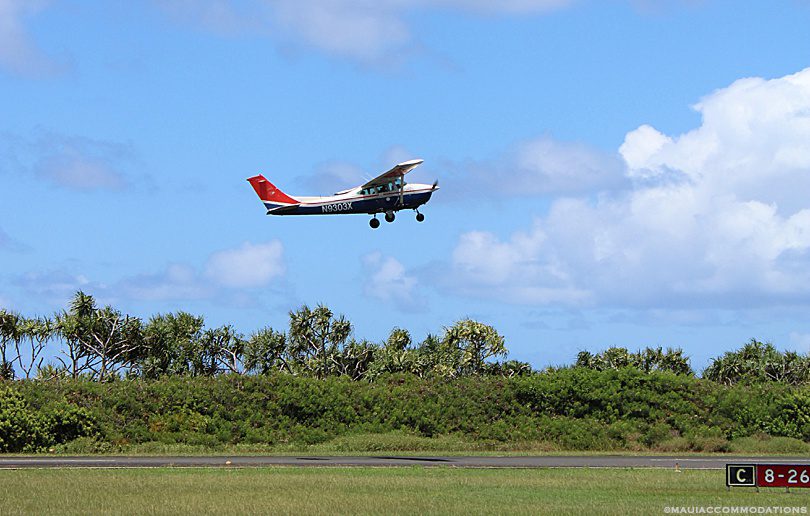
A hui hou!
kāne (KAH-nay): man, boy, male (you often see this sign on restroom doors)
kapu (kah-poo): forbidden, sacred, prohibited, not allowed (often seen on a sign to indicate “no trespassing”)
keiki (kay-EE-kee): child or children (keiki can be singular or plural)
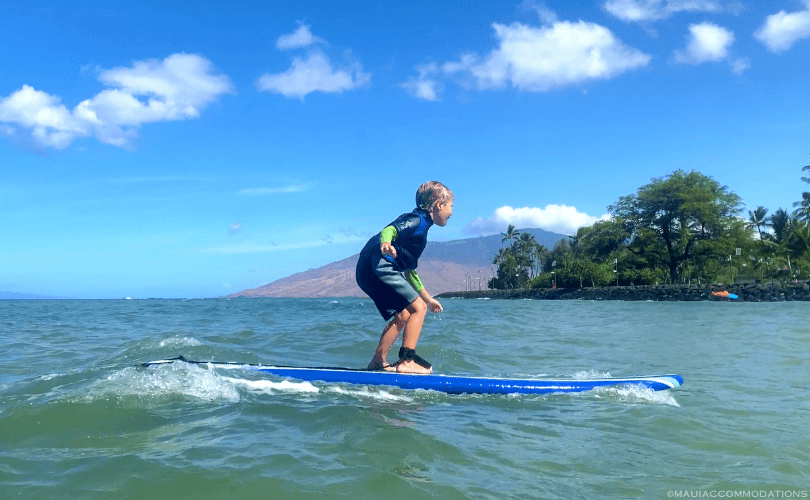
Keiki learning to surf (he’e nalu).
kōkua (koh-KOO-uh): help, cooperate; for instance, you might see a “no littering” sign by a trash can that says “Please Kōkua”
kuleana (KOO-lee-ana) responsibility
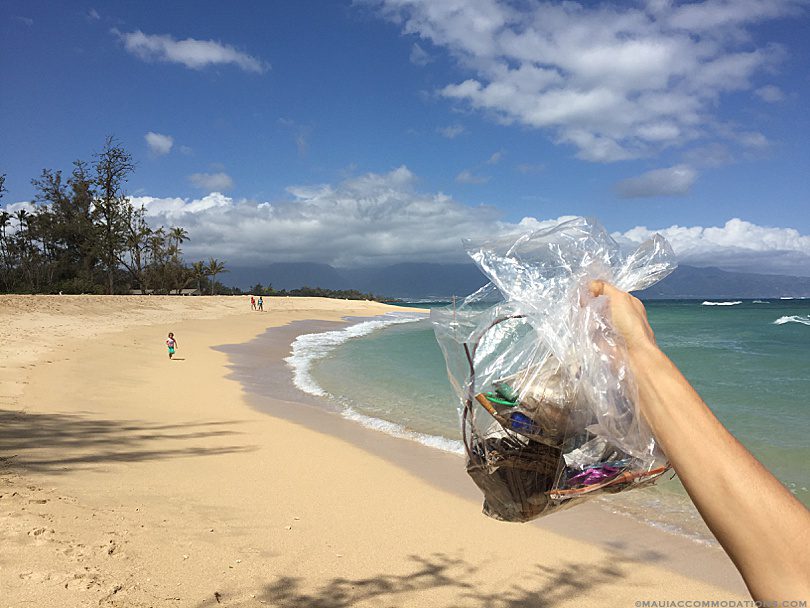
Help kokua by picking up trash at the beach. It’s all our kuleana.
kupuna (koo-POO-nuh): grandparent, ancestor, respected senior citizen
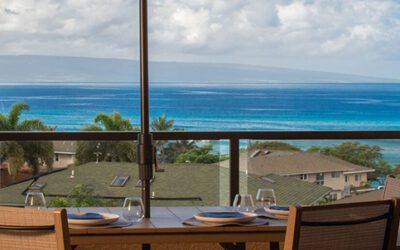
lānai (luh-NIE): porch, balcony, patio
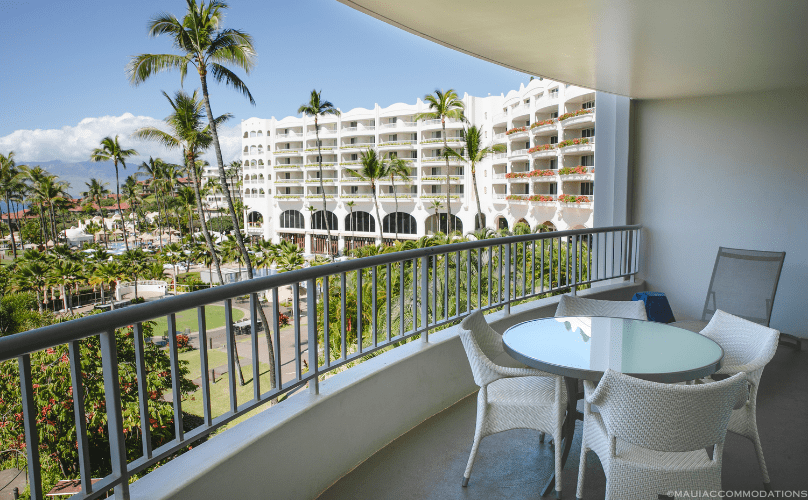
The lanai at Fairmont Kea Lani Resort.
mahalo (mah-HAH-low): thank you
‘ohana (oh-HAH-nuh): family; and extended family and friends in the larger sense
‘ono (OH-no): delicious (such as “This pizza is ‘ono!”)
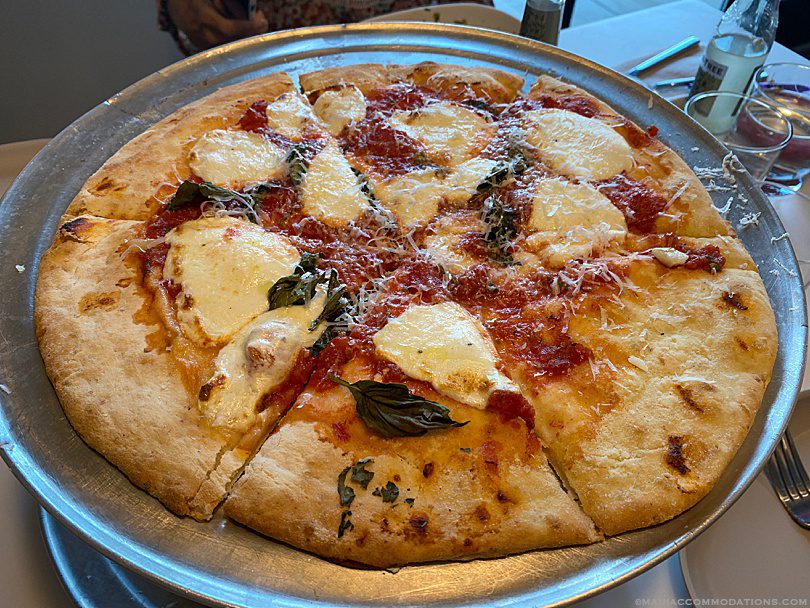
‘Ono pizza from Restaurant Marlow. Gonna be pau soon.
pau (pow): finished, all done; “pau hana” means finished with work, or after work, so you might hear locals say they are going out for pau hana drinks and pupu
pūpū (POO-poo): appetizers, hors dʻoeuvres
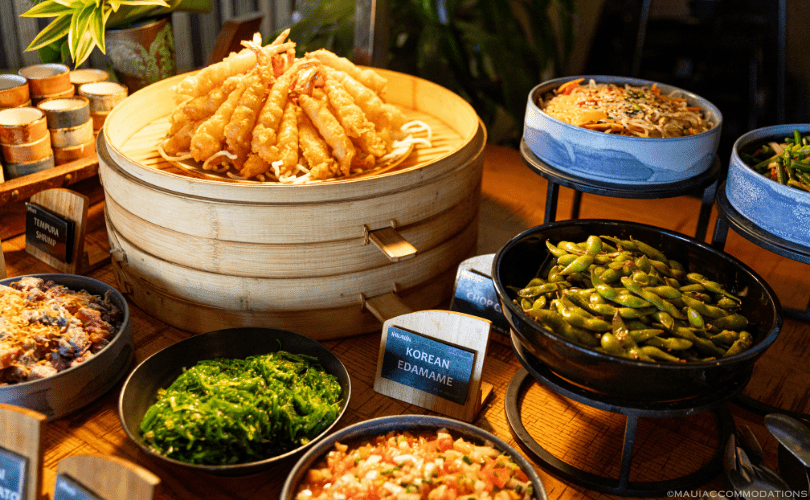
Some ono looking pupu!
wahine (wah-HEE-nay): woman, female (commonly seen on restroom doors)
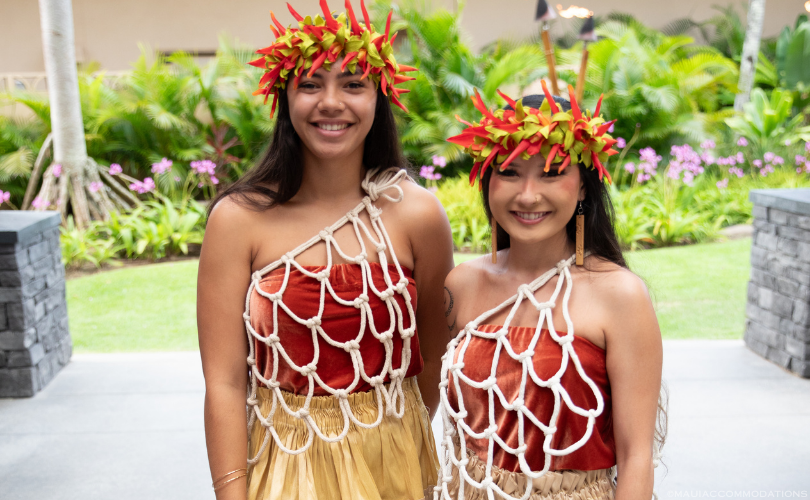
Two wahine at The Ritz-Carlton, Kapalua luau.
‘āina (EYE-nah) the land
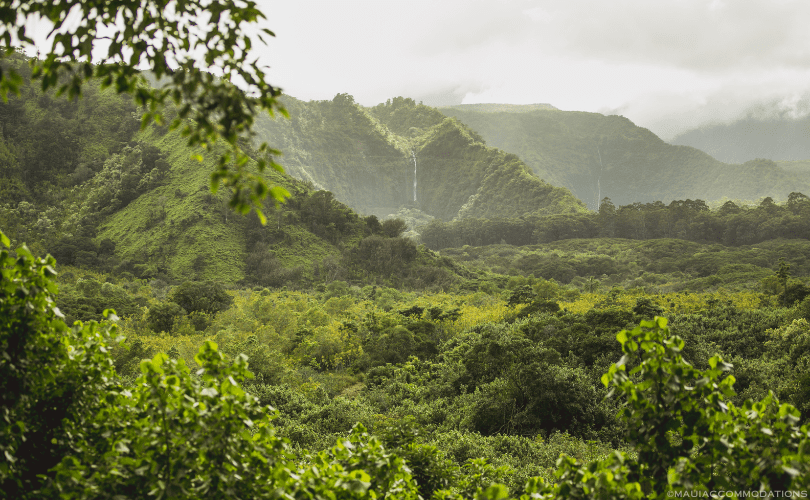
Beautiful aina.
kama’āina (kah-mah-EYE-nah) local or longtime resident
mauka (MOW-kah) towards the mountains
makai (muh-kie) towards the sea

Looking mauka from makai.
More information on the Hawaiian language here.
PIDGIN WORDS AND PHRASES
Pidgin is a distinct creole-style language spoken in the islands. It originated in Hawaii’s sugar plantations, when multiple different cultures lived and worked together.
Pidgin is like a form of abbreviated English. Many sentences are usually shortened to the most basic phrase. For example, “Would you like to leave now?” would become “You like go?” in Pidgin.
Some Pidgin requires a great deal of explanation, because there is often no literal translation for the words or phrases. With Pidgin, it’s all about how the term or phrase is used.
Here are a few common Pidgin phrases:
auntie, uncle – respectful terms when referring to someone of the older generation. Whether or not they are an actual blood relative doesn’t matter. Similar terms, used in a friendly greeting, could be “cousin,” “cuz,” or “brah”
broke da mouth – No, this doesn’t refer to a broken jaw; it describes extremely delicious food or drink (similar to the Hawaiian word “ono” above)
choke – plenty of. “Choke people at the beach today!”
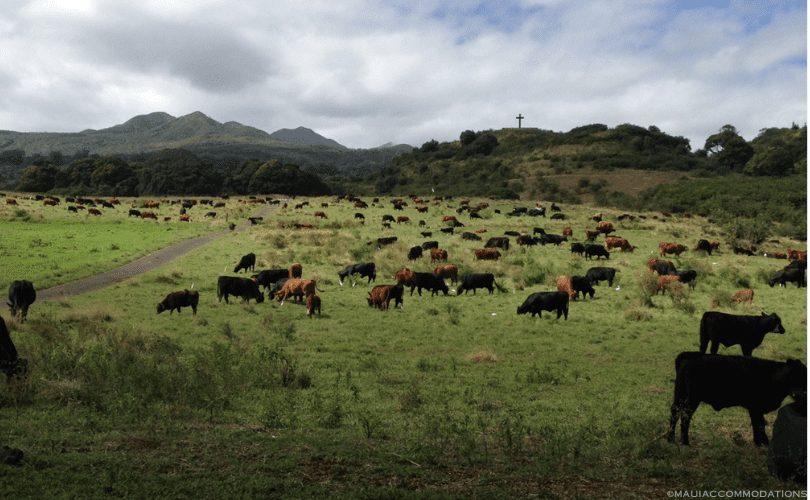
Choke cows in Hana!
chicken skin – goose bumps; not in reference to being cold, but something scary or unexplainable or emotional that makes your skin prickle and your hair stand up on the back of your neck
da kine – this is the catchall Pidgin term for just about anything. Similar to “what-cha-ma-call-it” in English, but far more versatile — and a lot shorter, which is fundamental in Pidgin! “Da kine” is like a verbal shorthand that can mean nothing or everything, depending on the context in which it is used. It can refer to a person, place, or thing, such as “Bring da kine” or “Let’s find da kine.” It can be a noun, verb, adverb, or adjective (“da kine house” or “da kine boyfriend”). “Da kine” is intentionally vague, and its meaning is derived solely from how it is spoken and in what circumstances.
grinds – great local food
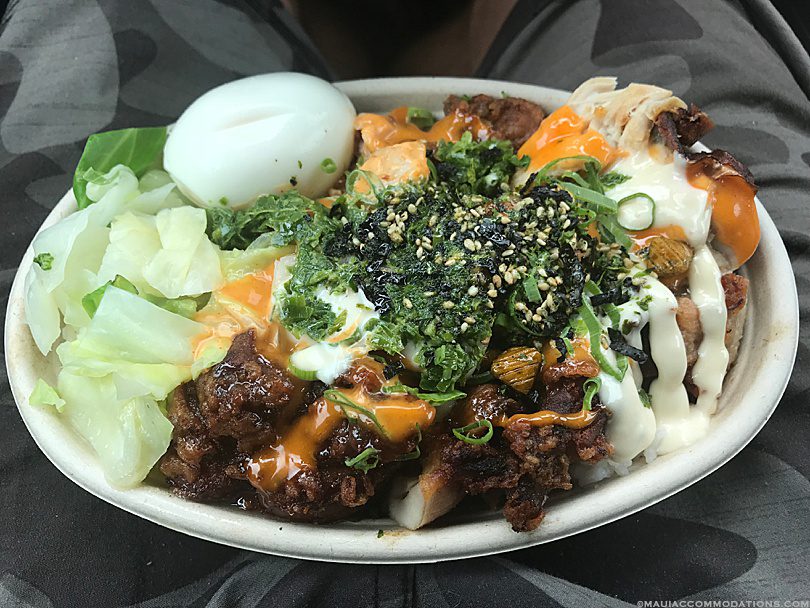
Broke da mouth grinds from Tin Roof. You know dakine.
howzit – short for “How’s it going?” or “How are you?”
kau kau (COW-cow) – a general term for food
no need – A stand-alone phrase that is a polite way of saying “That’s not necessary,” “No, thank you,” or “There’s no need for that.” Example: the waitress asks if I would like more water. The answer? “No need. Mahalo.”
stink eye – to give someone a dirty look out of irritation or annoyance. Hopefully you won’t get any stink eye while you’re visiting Maui. But just to make sure, check out my “Practical Do’s and Don’ts for Maui Visitors.”
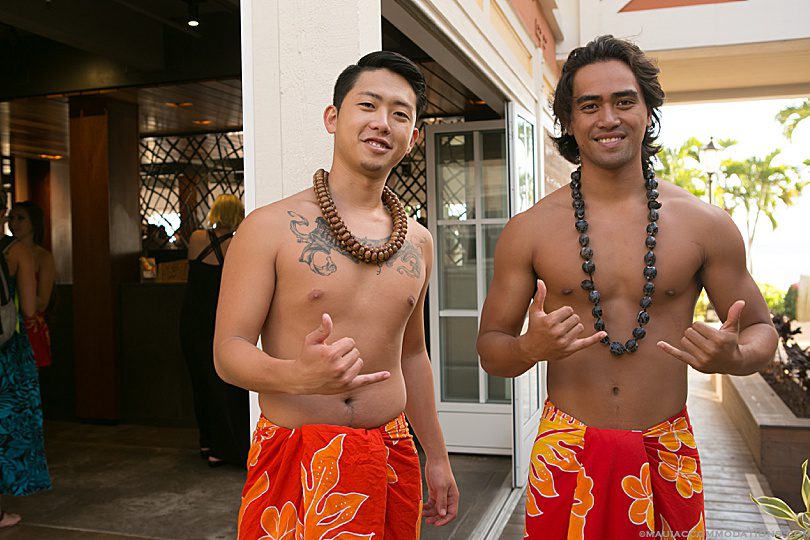
The opposite of stink eye.
shoots – a way of saying okay, you got it. “I’ll meet you there at four.” “Shoots.”
talk story – friendly chatting; just hanging around “talkin’ story”
Should YOU try to speak Pidgin? NOPE!
Pidgin is an art best left to those who were born and raised in the islands. Even for a longtime resident like me (over 35 years), Pidgin is difficult to master but really easy to butcher!
There is a natural flow to it that is hard to learn. So, the general unspoken rule of thumb in Hawaii is, if you weren’t raised with Pidgin, don’t try to speak it — you will only sound awkward. Leave it to the “born and raised” locals.
I don’t try to speak Pidgin, other than a few very simple words (like my “no need” example above). I would sound ridiculous trying to do so.
However, my husband, born and raised in the islands, can speak like a proper English professor then slip into local Pidgin as naturally as a second skin when he wishes to. So my recommendation is . . . listen to it, enjoy it, be confused and amused by it, but “no need try talk da kine story” with the locals!
- Looking for great places to stay on Maui? You’ll save by BOOKING DIRECTLY with the owners/managers of these accommodations.
- Looking for Maui deals? Sign up here for our free monthly Maui Deals & Steals enewsletter with the latest book-direct deals from our advertisers.

 Aloha! Tiffany here. I've been blessed to call Maui home since 2011. With a background in the island's finest restaurants and hotels, guiding visitors to create unforgettable Maui memories is more than a skill I've mastered—it's a profound source of joy for me.