
IS MAUI SAFE?
Generally, yes! Overall, Maui is a safe place for locals and visitors.
However, I would be misleading you if I said nothing bad ever happens here. Crime does exist on Maui. And the natural environment poses its own set of dangers: flash floods, strong ocean waves and currents, unstable terrain, ect.
Here are some tips to help you be aware and wise so you can enjoy a safe Maui vacation. This information is not meant to frighten you. But being informed and aware is NEVER a bad thing when traveling.
Below are several frequently asked Maui safety questions, as well as additional pointers to keep you safe and healthy during your stay.
Is going in the ocean safe on Maui?
Yes and no.
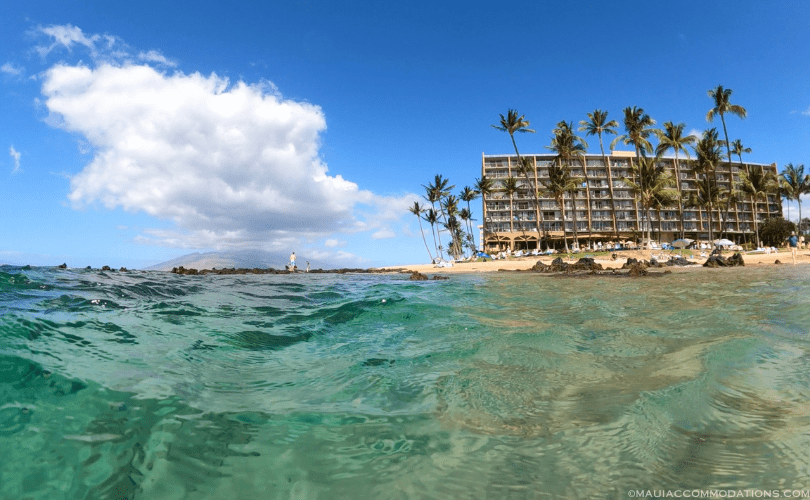
North Shore and East Maui beaches are more exposed to changing weather, strong ocean currents, and dangerous shorebreaks, so be extra careful there.
West Maui and South Maui tend to have calmer ocean and beach conditions, although dangerous conditions can occur there, as well. The West Maui beaches beyond Kapalua, like Mokuleia and Honolua, can be very dangerous, particularly with high winter surf.
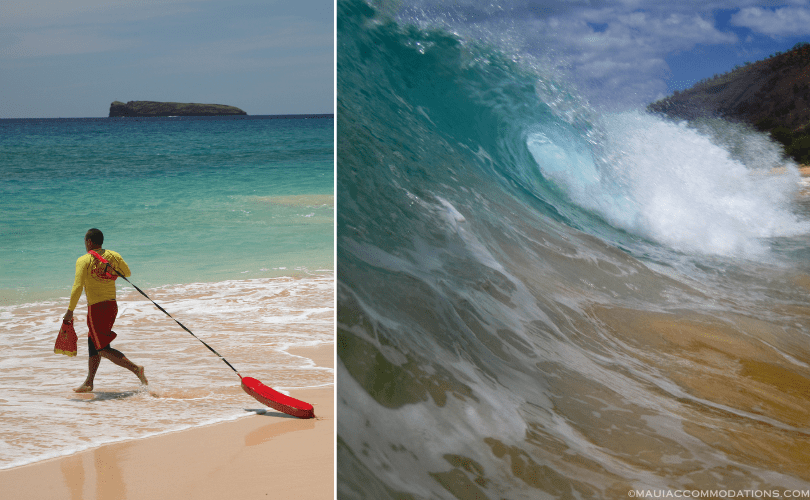
And Makena Beach (aka Big Beach) in South Maui is one of Maui’s most scenic beaches, but notorious for rogue waves that knock people down, causing serious injuries.
When not to go in the ocean on Maui?
Stay out of the ocean during periods of large swell, strong currents, high wind, or brown water.
Always, always, always check the weather and wave report before hitting the beach. Swells can come up quickly here in the islands—so if you know there’s high surf in the forecast, it’s not a good time to risk it.
The wind is also much stronger on Maui than other Hawaiian Islands. If the wind is blowing strong, it’s not a good time to try stand up paddling. Offshore rescues of people who have been swept offshore by strong winds are unfortunately very common. Fortunately Maui has an amazing fire department! But the moral of the story: check the weather to know what to expect, and always be aware of your surroundings.
Some additional Maui ocean safety tips:
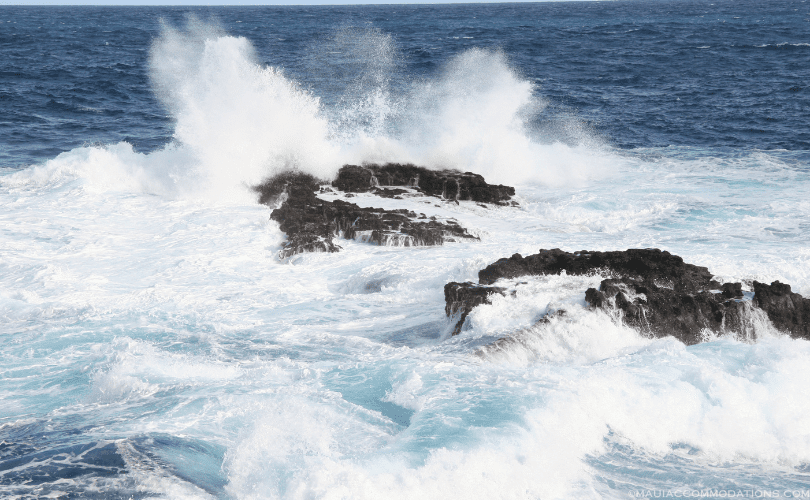
“Never turn your back to the sea” is a common warning here. Don’t be caught off-guard. An unexpected wave can knock you down and pull you out to sea while you’re still trying to get your flippers on! So keep your eyes on the surf.
Pay attention to the signs and flag warnings that are posted on some of the more populated beaches. They are there to advise you of unsafe conditions.
Use the buddy system. Never swim, snorkel, or surf alone in the ocean. Make sure someone knows you are there and is looking out for you.
After heavy rains, stay out of the ocean until the water clears. Don’t swim in the mouths of rivers or streams or in any murky areas. Murky waters attract predators (think “shark”), and you don’t want to be mistaken for a fish or turtle when they are looking for a snack.
You’ll find more Maui ocean safety tips here!
Of course, thousands of people safely enjoy Maui’s beaches every day, so it’s most likely that you will have an incredible and uneventful beach experience. But a little caution goes a long way.
What is not safe on Maui?
The Natural Environment
Believe it or not, Maui’s natural environment is one of the biggest dangers.
As with the ocean, be cautious and heed signs when you are exploring Maui’s natural environment—particularly remote areas, waterfalls, and hiking trails. Even if there is NO sign indicating danger, be careful anyway.
Be cautious and respectful, and explore Maui with the understanding that the raw, natural environment can also pose dangers. Don’t stand at the very edge of a cliff or peer into an oceanside blowhole. Don’t dive head-first into waterfall pools—there could be hidden rocks. When hiking, dress properly, stay hydrated, and keep an eye on weather conditions.
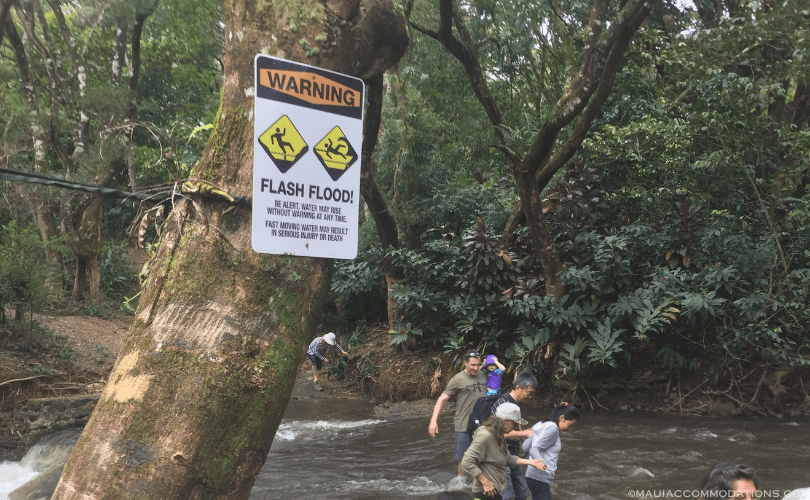
Some hiking trails can be prone to flash floods during storms, and visitors have drowned in the sudden powerful surge of floodwaters. Use common sense and explore Maui’s beauty cautiously.
Getting Lost
Every couple of weeks, the Maui News reports another Maui visitor who has gotten lost on a hiking trail. You don’t want to be that visitor. A search and rescue team is called in, and often you have to be airlifted out once you’re finally found. This is almost always a result of hikers veering off the trail, attempting to find their own way or discover something new.
Follow the signs along the hike and STAY ON THE TRAIL. Bring a flashlight (or fully charged phone), and plenty of food and water in case, God forbid, you have trouble finding your way back. Study the hiking trail you’re about to embark on and bring a printed map, or take screenshots on your phone of the trail directions. Better yet, let an expert lead you along the hiking trail! Guides have extensive knowledge of the area, fascinating information about the history and plant life, and often have access to areas that are otherwise off limits.
Dehydration
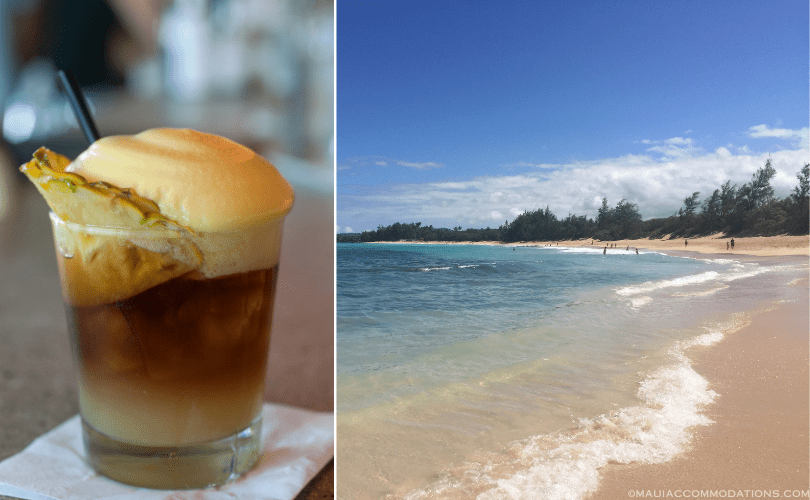
In Hawaii, we are closer to the equator and the sun is more intense. This causes unexpected sunburns, but also severe dehydration. We all know that time flies when you’re having fun, and while you’re taking in all of the beauty surrounding you, playing in the ocean waves, and throwing back those mai tais (that suck the hydration out of you), you may forget to drink water.
Beware of Maui Guidebooks and Uninformed Social Media Posts!
Yes, I am actually warning you against some guidebooks! There are some excellent guidebooks out there to help you explore Maui. But don’t trust everything you read in a guidebook or see on social media.
If any guidebook or post is intent on revealing a “secret” local place (like a hidden waterfall or beach) on the island that requires you to climb over fences, go through locked gates, trespass on private land, or do anything that feels wrong or unsafe, just say no. If there is no welcome signage, it’s probably not a good place to be. There are plenty of other beautiful places to experience on Maui without having to trespass or endanger yourself.
Is there crime on Maui?
Maui is not crime-ridden. But, just like pretty much everywhere else, there are despicable people in this world and I’m sorry to say we have a few of them on Maui, too.
Most crime on Maui is non-violent, like vehicle break-ins and thefts.
Don’t leave valuables in your rental car (including the trunk), particularly at parking areas for beaches, hiking trails, or other places where it’s obvious that you will be gone for a while. Lock the doors and windows of your hotel room or condo when you’re out and while sleeping. Don’t leave valuables unattended at the beach or hotel pool. Don’t spend time in isolated areas where no one else is around. In unfamiliar territory there IS safety in numbers.
IF YOU DO NEED HELP
- In an emergency, dial 911 to reach Police, the Fire Department, or an Ambulance
THE BOTTOM LINE
To sum it all up, use common sense when you’re on Maui, just as you would at home. Don’t take chances with your personal safety that you wouldn’t do anywhere else, just because this is “paradise.” Listen to your senses. If it doesn’t feel safe, don’t do it. Common sense rules!
Now get out there and have an awesome time on Maui! (But please don’t hang out under any coconut trees!)

- Looking for great places to stay on Maui? You’ll save by BOOKING DIRECTLY with the owners/managers of these accommodations.
- Looking for Maui deals? Sign up here for our free monthly Maui Deals & Steals enewsletter with the latest book-direct deals from our advertisers.

 Aloha! Tiffany here. I've been blessed to call Maui home since 2011. With a background in the island's finest restaurants and hotels, guiding visitors to create unforgettable Maui memories is more than a skill I've mastered—it's a profound source of joy for me.